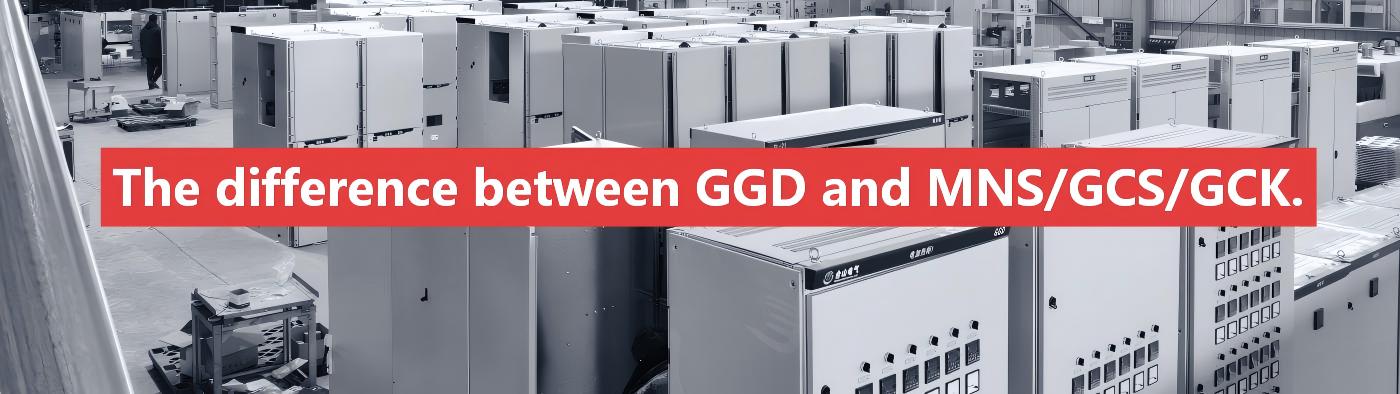
In low-voltage power distribution systems, GCK, GCS, MNS and GGD are widely used equipment types. They have significant differences in technical performance, safety design and structural characteristics, and are suitable for different scenario requirements. The following is a comparative analysis of their advantages and disadvantages from three aspects: technology, safety and structure.
Technical Differences
GCK (Withdrawable Low-Voltage Distribution Cabinet)
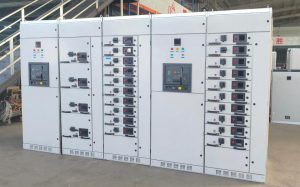
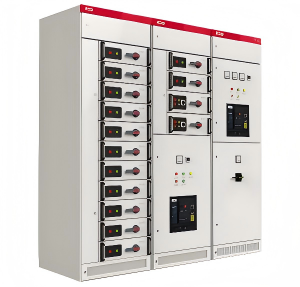
Technical Features: Adopts modular design, standardized drawer units, rated current ≤ 4000A, and high short-circuit breaking capacity (generally 30-50kA). Supports hot swapping of drawer units for easy maintenance and replacement, but the unit size is fixed, resulting in limited expansion flexibility.
Advantages: The drawer-type structure realizes independent control of circuits, is easy to operate, and is suitable for places with many circuits and frequent maintenance needs.
Disadvantages: Limited by the module, the adaptability to high-current circuits is weak, and the technical parameters are slightly lower than those of MNS.
GCS (Withdrawable Low-Voltage Switchgear Assembly)
Technical Features: Based on modular and combinatorial design, the rated current can reach 6300A, the short-circuit breaking capacity is 50-80kA, and it supports mixed configuration of drawer and fixed units. Adopts a fully enclosed structure with IP40 protection level and excellent internal insulation performance.
Advantages: Wide current rating coverage, strong compatibility, can meet the needs of complex power distribution systems, and has great potential for intelligent integration.
Disadvantages: High manufacturing cost and strict requirements on installation space. 2025
MNS (Modular Low-Voltage Withdrawable Switchgear)
Technical Features: Derived from ABB technology, with the highest degree of modularization, rated current ≤ 6300A, short-circuit breaking capacity up to 80-100kA, supporting interchangeability of the full range of drawer units. Uses standardized interfaces, compatible with components of different brands, and has extremely strong expandability.
Advantages: Mature technology, leading performance parameters, suitable for critical power distribution scenarios with high reliability and high capacity requirements.
Disadvantages: Expensive price and high professional requirements for operation and maintenance personnel.
GGD (Fixed Low-Voltage Distribution Cabinet)
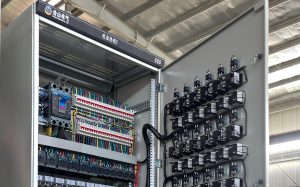
Technical Features**: Fixed installation structure, rated current ≤ 3150A, short-circuit breaking capacity 25-40kA, components are directly fixed in the cabinet without drawer units. Simple design, using general components, maintenance relies on overall power outage.
Advantages: Low cost, compact structure, suitable for occasions with stable load and low maintenance frequency.
Disadvantages: Does not support hot swapping, maintenance requires power outage, and poor flexibility.

Safety Aspects
GCK/GCS/MNS (Withdrawable Type)
Advantages
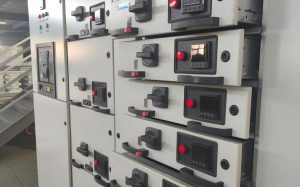
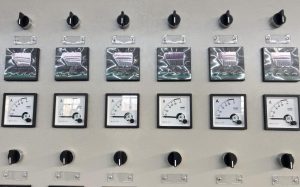
Drawer units are equipped with mechanical interlocks and electrical interlocks to prevent misoperation;
Live parts are fully enclosed with high protection level (IP30/IP40), reducing the risk of electric shock;
Supports three-position status indication of “Working-Testing-Separated” for drawers, making operation visible.
Disadvantages: Improper operation during drawer insertion/extraction (such as incomplete separation) may cause arc risk, which relies on standardized operation.
GGD (Fixed Type)
Advantages: Simple structure, low failure rate, and no plug-in operation risk.
Disadvantages: Maintenance requires overall power outage, increasing power outage time and safety operation steps; There are many exposed parts of components, with low protection level (IP20), which are easily affected by dust and foreign objects.
Structural Aspects
GCK/GCS/MNS (Withdrawable Type)
Advantages
– Drawer units are independently separated, circuit faults do not affect each other, facilitating quick replacement;
– Modular design, flexible layout, can expand or adjust circuits according to needs;
– Optimized heat dissipation channels in the cabinet, suitable for high power density configuration.
Disadvantages: The cabinet depth is large (usually ≥ 800mm), requiring high installation space; the manufacturing cost is higher than that of GGD.
GGD (Fixed Type)
Advantages:
– Compact structure, small cabinet size (depth 600-800mm), saving installation space;
– Direct component installation, simple wiring, and the cost is only 50%-70% of withdrawable equipment.
Disadvantages: The fixed structure makes circuit adjustment difficult, cannot realize live maintenance, and has poor later expansion.
Summary
GCK/GCS/MNS: Suitable for medium and high voltage power distribution, frequent maintenance, and high reliability requirement scenarios (such as data centers, industrial production lines), with advanced technology but high cost.
GGD: Suitable for low-voltage power distribution scenarios with stable load and limited budget (such as civil buildings, small factories), with outstanding cost performance but insufficient flexibility.
Users need to select suitable low-voltage equipment according to the actual load capacity, maintenance frequency and budget to achieve safe and efficient power distribution management.